Posts

Salwar Kameez: Where Is Salwar Kameez From?

Image
Salwar Kameez is a traditional dress worn by women in South Asia, particularly in India, Pakistan, and Afghanistan. The outfit consists of three pieces: a long tunic top known as the "kameez," loose pants known as the "salwar," and a scarf known as the "dupatta." The origin of the salwar kameez and the history of salwar kameez can be traced back to the Mughal Empire, which ruled over parts of South Asia from the 16th to the 19th centuries. During this time, the dress was heavily influenced by Persian and Central Asian styles, and became a symbol of elegance and sophistication for women of the court. As the Mughal Empire declined, the salwar kameez evolved to reflect the styles and traditions of the various regions in which it was worn. In the Punjabi region of India and Pakistan, for example, the dress took on a more relaxed and comfortable form, featuring loose and baggy pants and brightly colored and heavily embroidered tunics. Today, the salwar kameez ...

Discover the Elegance of Banarasi Sarees: A Timeless Indian Tradition

Image
Banarasi sarees, also known as Benarasi sarees, are a traditional Indian garment that have been worn by women for centuries. These sarees are known for their intricate designs and luxurious fabrics, making them a popular choice for special occasions such as weddings and festivals. The sarees are made in the city of Varanasi, also known as Benaras, in the northern state of Uttar Pradesh, India. The city is famous for its silk and brocade fabrics, which are used to create the sarees. The sarees are made using a combination of silk and gold or silver thread, known as zari, which gives them their characteristic sheen and luster. Pure Katan Minadaar Jamawar Banarasi Saree With On All-Over Phool Bail The designs on Banarasi sarees are inspired by nature and traditional Indian motifs such as the lotus flower, paisleys and intricate geometric patterns. The sarees are also known for their delicate zari work, which is done by skilled artisans using a technique known as kadhua. The sarees come in...

Indian Printed Sarees Facts : Colorful & Elegant Women Fashion

Image
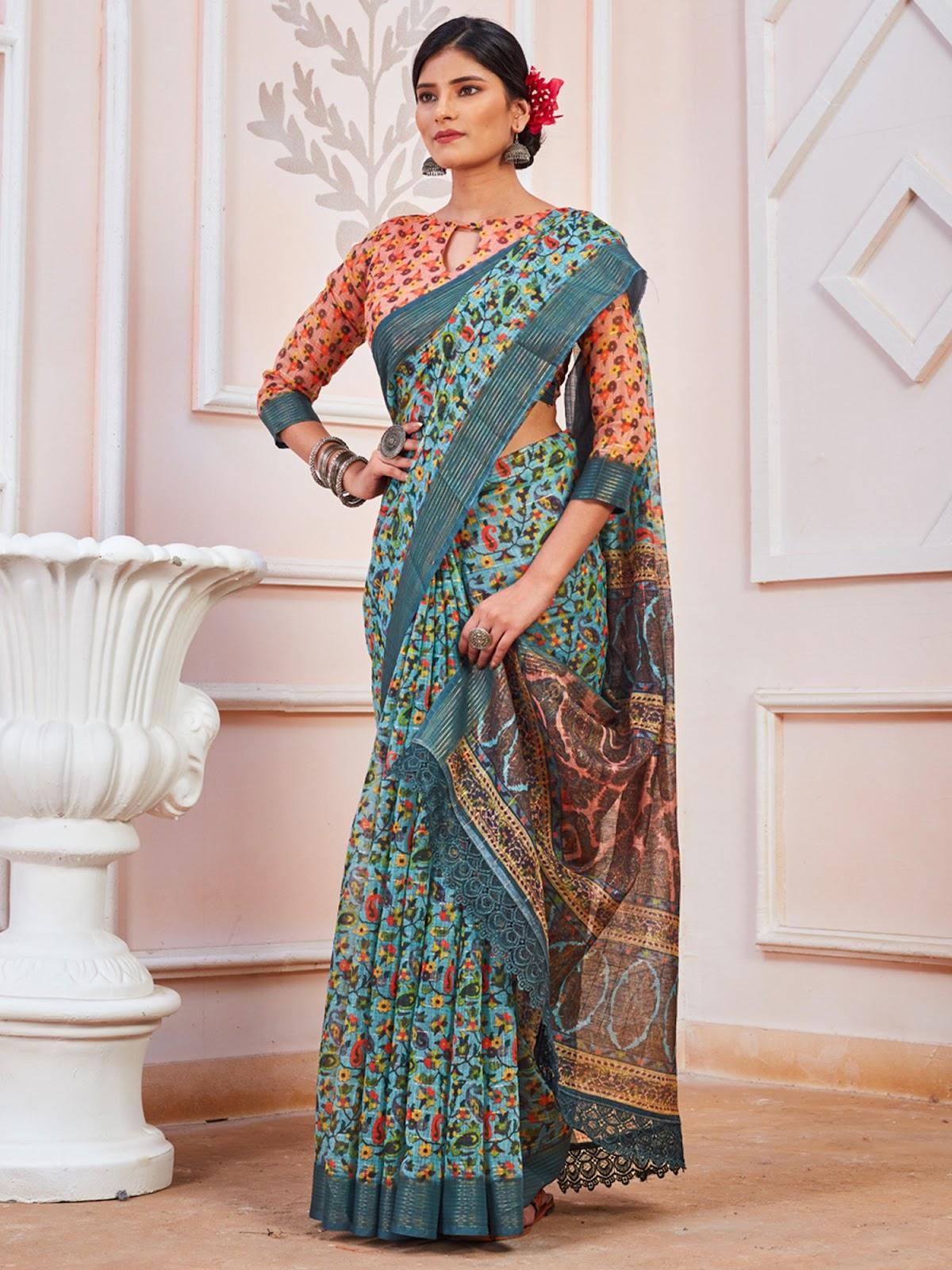
  Printed textiles have been widely used since they were first introduced. Indian printing methods also include handwork, stencils, screen printing, block printing, tie-and-dye methods, and prints. Since Indian printing is produced employing specialised knowledge in this internationally acknowledged and acclaimed art form, it is unparalleled and unmatched in the world, much like its clothing. Prints have had an influence on traditional Indian textiles like sarees since they have become such a significant part of our textile industry and fashion sector. The variety of options offered might make buying a saree challenging at times. Because customers can choose and choose from a range of colours, brands, and fabric types by simply clicking and sorting through the available choices, many people decide to purchase printed sarees online. Sarees With Prints Are Popular Sarees with prints are quite popular right now. The whole Bollywood and fashion sectors have been mesmerised by pattern-f...

What Is Special About Makar Sankranti | Beauty Of This Festival

Image
  Why Do We Celebrate Makar Sankranti? Makar Sankranti, which is observed in several parts of India, commemorates the beginning of a new season when the Sun begins to rise later in the day. The harvest festival is another name for Makar Sankranti. Every year on January 14th, India welcomes a wave of holiday enthusiasm over the country. The country celebrates an end and a new beginning with Makar Sankranti - the Harvest Festival - in between yellow colours and a blue sky filled with colourful kites. What Exactly Is Makar Sankranti? Sankranti in the Vedas denotes the movement of the Sun from one rashi (zodiac constellation) to the next. As a result, there are 12 Sankrantis in a year. The Makar Sankranti, also known as 'Poush Sankranti,' is the most auspicious of all, and it is one of the few Hindu festivals that is synchronised with the solar cycle. Makar Sankranti's significance extends beyond its religious significance. In reality, the celebration also commemorates the star...

Which type of Indian Shawl keeps you the warmest?

Image
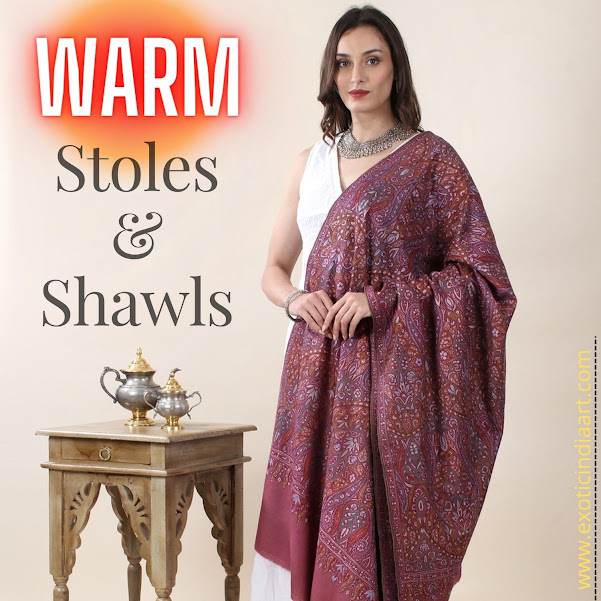
The classy Pashmina Shawl manufactured in Kashmir keeps people the warmest. TRADITIONAL INDIAN SHAWLS & STOLES FASHION  Traditional Indian fashion is more of an art form than an aspect of everyday functionality given a spin of entertainment. There is great diversity and depth of meaning in each garment. A plethora of embroideries, weaves, and stitches, each of which has been practised by generation after generation of a single family from some obscure rural pocket; strict codes of colours to be adhered to by women at different stages of womanhood such as bridal, motherhood, and widowhood; and the kind of exquisite embellishments fashioned in the recesses of the subcontinent and coveted the world over.   Gorgeous colours, unique drapes, and superb layering characterise traditional Indian-wear such as sarees, shawls, suits, and lehengas. This section comprises the elegant Indian outerwear, the shawls, stoles, and dupattas. These constitute a variety of Indian scarves, each ...

What Are The Types of Stitches Used in Lucknowi Chikankari? | Desinger Indian Sarees

Image
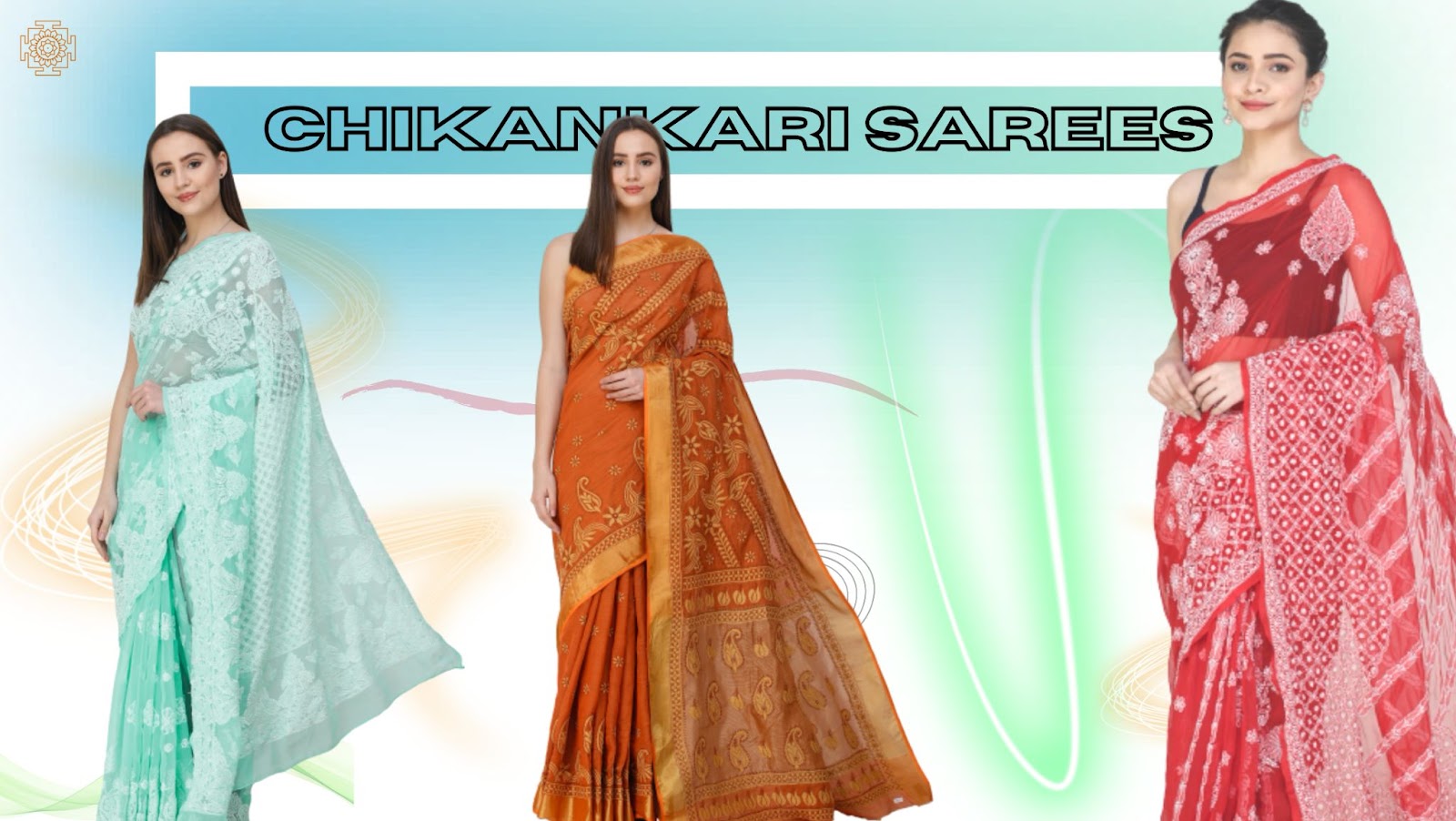
Chikan Sarees in muslin or malmal fabric are mostly appreciated, yet they are found in a wide range of fabrics such as cotton, georgette, chiffon, and even crepe. And the types of stitches used are “ Hool Stitching and Tepchi ” What is Chikankari Saree And Its Origin State: The origin of Chikankari work can be traced to the gullies of Lucknow, Uttar Pradesh. The literal meaning of the word Chikan is embroidered fabric and has been derived from the Persian word ‘Chikin.’ And, this style of delicate handwork is believed to have been presented by Nur Jahan, the wife of the Mughal ruler Jahangir. Authentic chikan work of the finest quality can be seen at the Chowk, Lucknow, from where it is delivered all over the world.   Though it is considered to have taken birth in Lucknow, Yet it is a bit masked with mystery. Many historians claim that chikankari is a Persian art which was brought to India during the rule of Mughal Emperor Jahangir by his beautiful and artistic wife Mehrunissa. Sh...

How can you identify a Bomkai Saree? | Important Points

Image
The use of tightly woven cotton, sophisticated floral and geometric motifs in the margins, and contrasting color borders and pallu have made these unique culturally. Bomkai Saris are considered to be the traditional charm of eastern India, specifically Orissa. Bomkai is one of the identified geographical indications of India. These saris are available in both cotton and silk fabrics. The most delightful part is its threadwork in the designs of the border and the pallu. Gaining popularity amongst fashion designers these saris are being worn by many celebrities. Aishwarya Rai Bachchan, the Bollywood diva, wore a special type of Bomkai known as "Radhakunja" at her wedding. Three saris which were designed by Chaturbhuj Meher at Sonepur, Odisha, were perfect to match her grace and aristocracy. These eye-catching saris are now considered a must in a women’s wardrobe. Also, known as Sonepuri sari, the charming Bomkai saris are exclusively woven in handlooms in the western parts of O...